
While you sleep, your skin is doing some of its most important work. The question is whether you are giving it the conditions it needs to do that work properly.
Your skin has a schedule
Every cell in your body follows a 24-hour internal clock, called the circadian rhythm. Skin cells are no exception. During the day, your skin is in defence mode: its entire focus is on protecting you from UV radiation, pollution, free radicals, and physical damage. The barrier is tight, the immune response is alert, and energy is directed outward.
At night, the switch flips. The threats are gone. Your skin shifts into repair mode.
Blood flow to the skin increases. Cell division accelerates. Repair enzymes reach peak activity. The barrier becomes more permeable — meaning it is more receptive to what you apply. Collagen-producing fibroblasts are at their most active. A process called autophagy, the cellular recycling of damaged components, runs in the background, clearing debris so the skin can rebuild.
This is your nocturnal biology. And understanding it changes how you think about every product in your bathroom.
The peak repair window
Between midnight and the early hours of the morning, the skin reaches peak repair mode. This is when:
- Skin repair enzymes are at their highest activity
- Melatonin signalling peaks — not just a sleep signal, but a potent antioxidant and biological repair trigger
- Fibroblast (collagen-producing cell) activity is at its most intense
- Autophagy runs at its most efficient — the cellular recycling process that clears damaged components so the skin can rebuild
- Barrier renewal accelerates
Melatonin is not just a sleep hormone. It is a potent antioxidant and a critical signal in the skin's own repair process. As light fades and melatonin rises, the skin receives a clear instruction: stop defending, start rebuilding. This is why we include melatonin liposomes in our Midnight Elixir — not as a trend ingredient, but because it is the skin's own timing signal.
What poor sleep actually does to your skin
A bad night's sleep does not just leave you feeling tired. It disrupts the entire repair cycle. Without adequate sleep:
- Cell division slows, accelerating skin ageing and slowing wound healing
- Blood flow decreases, leaving skin looking flat, dull, and depleted of nutrients
- Collagen breaks down faster than it can be produced, deepening lines and reducing firmness
- Cortisol rises, driving inflammation and increasing sebum production — the mechanism behind stress breakouts
- The skin barrier weakens, leading to dryness, sensitivity, and increased trans-epidermal water loss
- Autophagy stalls, allowing cellular damage to accumulate rather than be cleared
Over time, chronic poor sleep accelerates visible ageing in ways no product can fully counteract. It is the foundation on which everything else rests.
Why your day and night products need to be different
Because your skin is doing fundamentally different things at different times, your products should reflect that. Your daytime moisturiser is, in essence, a bodyguard: its priority is protection. SPF to shield against UV. Stable antioxidants to fight free radicals. A lightweight texture that functions under make-up.
We believe antioxidants will prove to be this generation's SPF moment. The research on free radical damage and premature skin ageing is as compelling as the UV evidence was a generation ago. The challenge is formulation: most antioxidants are highly unstable. Many forms of Vitamin C, for example, degrade rapidly on contact with light and air, losing their protective power. This is why at OSKIA we only use stable, clinically proven antioxidant forms.
Your night cream is something else entirely. With no threat from the outside world, the skin needs nourishment and biological support. Richer textures. Active ingredients. And crucially, nothing photosensitive — retinoids and AHA acids must only be used at night, both for safety and efficacy.
Using the same product for both is a compromise that serves neither purpose well.
Key ingredients to look for at night
The most effective night-time actives work precisely because they align with what the skin is already trying to do.
Retinoids. The most clinically validated anti-ageing ingredient available. They accelerate cell turnover, stimulate collagen synthesis, and inhibit collagen-destroying enzymes. They are broken down by UV light, which is why they belong exclusively in the evening routine. At OSKIA, we use Hydroxypinacolone Retinoate (HPR), a fourth-generation retinoid that binds directly to retinoid receptors without requiring metabolic conversion — delivering full efficacy with significantly less irritation.
Growth Factors. EGF, IGF-1, FGF, VEGF — the biological signals the skin uses in its own repair cycle. Delivered topically at night, when the skin is most receptive, they support cell renewal, collagen production, and tissue repair.
Peptides. Amino acid chains that signal the skin to produce collagen and elastin. Snap-8 (Acetyl Octapeptide-3) relaxes expression muscles to smooth the appearance of lines over time.
Melatonin Liposomes. Applied topically, melatonin works with the skin's own repair signalling — supporting the process at a biological level.
AHAs and Fruit Enzymes. Used in a weekly exfoliation step. They clear the dead cell layer, accelerate cell turnover, and significantly improve absorption of everything applied after — which is why they should always be followed by your serums and night cream.
Ceramides. Lipid molecules that restore barrier integrity overnight, preventing moisture loss and reducing sensitivity.
Feed your sleep
What you eat in the hours before bed has a measurable effect on sleep quality, which in turn affects your skin. Tryptophan — found in almonds, bananas, walnuts, and chicken — converts to serotonin and then to melatonin. Tart cherries are one of the few natural dietary sources of melatonin. Magnesium relaxes the nervous system and supports deep sleep stages. Chamomile, passionflower, and valerian root all raise GABA levels — the brain's calming neurotransmitter — making sleep onset easier.
Equally important: avoid alcohol (it suppresses REM sleep, the most restorative phase, even when it helps you fall asleep), high-glycaemic foods in the evening, and caffeine after midday for most people.
A simple pre-bed drink: blend 1 ripe banana, 1 cup unsweetened almond milk, half a cup of tart cherry juice, 1 tablespoon of almond butter, and a quarter teaspoon of cinnamon. Rich in magnesium, tryptophan, and natural melatonin. Drink 30–60 minutes before bed.
The night-time ritual
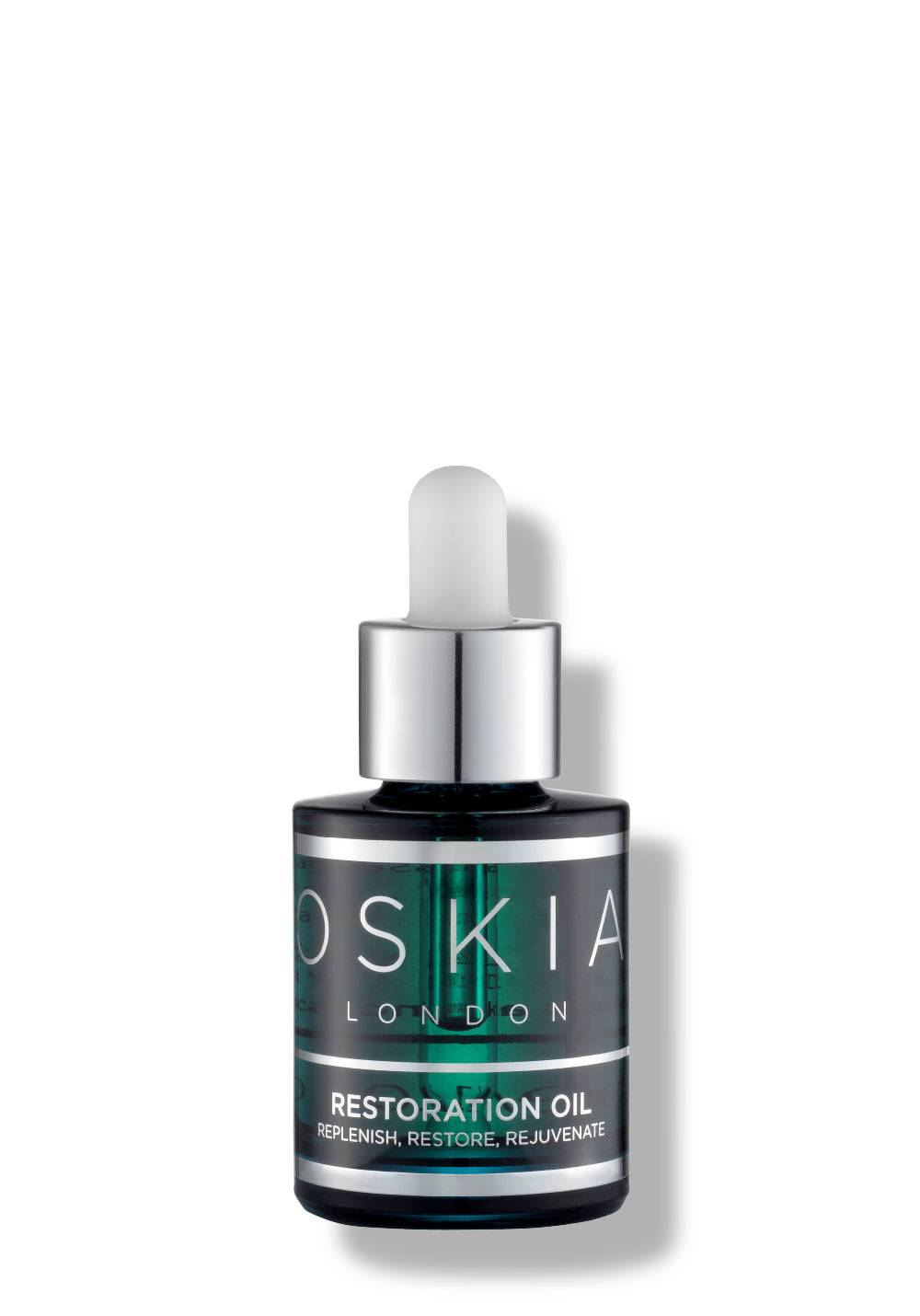
The routine is not complicated. The principle is simple: cleanse, treat, seal. Start with a thorough double cleanse to remove SPF, make-up, and the day's pollution. Layer a hydrating serum. Apply your most potent treatment — a retinoid on some nights, a growth factor serum on others. Finish with a nourishing night cream, then seal with a facial oil to prevent overnight moisture loss.
The order matters: lightest to richest, most active first. Everything applied after exfoliation penetrates more deeply — so the exfoliation step, when you use it, always comes first.
Why we exfoliate only at night
There are three reasons exfoliation belongs exclusively in the evening.
The first is photosensitivity. AHAs and retinoids increase the skin's sensitivity to UV light. Using them in the morning before going outdoors is a risk to both skin integrity and product efficacy.
The second is alignment with the repair cycle. Exfoliation accelerates cell turnover, clearing the dead layer so new cells can surface. At night, when cell division peaks, those new cells are ready. You are working with the skin's natural schedule, not against it.
The third is absorption. Remove the dead cell layer before your serums and night cream, and everything that follows penetrates more deeply. Once a week is right for most. Twice for drier, more mature, or blemish-prone skin. Never more: over-exfoliation damages barrier function and causes the inflammation you are trying to prevent.
Shop the Night Edit
Every product below is formulated to work with your nocturnal biology.




Frequently Asked Questions
What happens to your skin while you sleep?
While you sleep, your skin enters repair mode guided by its circadian rhythm. Between midnight and the early hours of the morning, skin repair enzymes reach their highest activity, melatonin signalling peaks, collagen-producing fibroblasts are most active, and autophagy — the skin's cellular recycling process — runs at its most efficient. Blood flow to the skin increases, delivering nutrients and removing waste products. This is when the skin heals damage from the day and rebuilds its structural integrity.
Does lack of sleep age your skin?
Yes. Chronic poor sleep accelerates visible skin ageing through several mechanisms. Without adequate sleep, collagen production slows, autophagy stalls, and cortisol rises — which breaks down collagen and drives inflammation. The skin barrier weakens, leading to dryness and sensitivity, and dark circles and puffiness develop around the eye area. Over time, this damage compounds in ways that no skincare product can fully reverse. Sleep is the foundation on which all skincare works.
What is the circadian rhythm and how does it affect skin?
The circadian rhythm is the body's internal 24-hour clock. Every skin cell has its own molecular clock, governing when it protects, when it repairs, and when it produces collagen. During the day, skin is in defence mode — protecting against UV, pollution, and free radicals. At night, it switches to repair mode: cell division accelerates, blood flow increases, and the barrier becomes more permeable and receptive to active ingredients. Understanding this rhythm is the basis for intelligent night-time skincare.
Why do I need different skincare products for day and night?
Because your skin has different priorities at different times. During the day, it needs protection — SPF, stable antioxidants, lightweight textures. At night, it needs nourishment and biological support — richer textures, active ingredients like retinoids and peptides, and no SPF (which is unnecessary overnight). Active ingredients like retinoids must only be used at night as they are photosensitive and broken down by UV light. Using the same product for both compromises both protection and repair.
What are the best skincare ingredients to use at night?
The most effective night-time ingredients include: retinoids (which stimulate collagen and accelerate cell turnover — must be used at night as they are photosensitive), peptides (which support collagen and elastin production), growth factors (EGF, IGF-1, FGF, VEGF — the biological repair signals the skin uses naturally), melatonin liposomes (which work with the skin's nocturnal repair cycle), ceramides (which restore barrier integrity), hyaluronic acid (which penetrates more deeply at night when the barrier is more permeable), and MSM (an organic sulphur compound that supports collagen synthesis and nutrient delivery).
Why should you only exfoliate at night?
There are three reasons. First, AHAs, fruit enzymes, and retinoids all increase photosensitivity — exfoliating in the morning before sun exposure risks irritation and compromises the skin's UV defence. Second, exfoliation works best in alignment with the skin's repair cycle: cell division peaks at night, so clearing the dead cell layer when new cells are ready gives the best results. Third, removing the dead cell layer before applying serums and night cream significantly improves their absorption and efficacy.
What foods help your skin while you sleep?
Foods that support sleep quality — and therefore skin repair — include tart cherries (one of the few natural dietary sources of melatonin), almonds and bananas (rich in magnesium and tryptophan, which convert to serotonin and melatonin), walnuts (natural melatonin and omega-3 fatty acids), and fatty fish (omega-3s that regulate serotonin). Chamomile tea, valerian root, and passionflower raise GABA levels, supporting deeper sleep. Avoid alcohol, high-glycaemic foods, and caffeine in the evening, as all three disrupt sleep architecture.
What is autophagy and why does it matter for skin?
Autophagy — from the Greek for "self-eating" — is the process by which cells identify damaged components, package them, and break them down for raw materials. In skin, it is the body's own repair and recycling system, running most actively during deep sleep. As we age, autophagy slows. Chronic poor sleep suppresses it further, allowing cellular damage to accumulate faster than it can be cleared. This is one of the key mechanisms by which poor sleep accelerates visible ageing.
How does cortisol affect skin?
Cortisol is the body's primary stress hormone. When chronically elevated — which happens with poor sleep — it breaks down collagen, drives skin-wide inflammation, increases sebum production (contributing to breakouts), disrupts the gut microbiome (which affects skin via the gut-skin axis), and weakens the skin barrier. This is the biological mechanism behind what is commonly called "stress ageing". Getting consistent, quality sleep is the most effective single intervention for keeping cortisol in a healthy range.
What is melatonin's role in skin health?
Melatonin is not just a sleep hormone. It is a potent antioxidant and a key signal in the skin's nocturnal repair cycle. As light fades and melatonin rises, the skin receives the instruction to switch from defence to repair mode. Applied topically in liposome form — as in OSKIA Midnight Elixir — melatonin can work directly with the skin's repair signalling, supporting cellular regeneration and antioxidant defence at a biological level, not just superficially.
Can I use retinol every night?
It depends on the type of retinoid. Traditional retinol requires an adjustment period and should be introduced gradually — every other night at first. Fourth-generation retinoids such as Hydroxypinacolone Retinoate (HPR), used in OSKIA Super-R Retinoid Capsules, are significantly less irritating and can typically be used nightly from the start. All retinoids must be used at night only, as they are broken down by UV light and increase the skin's sensitivity to sun. Always follow with SPF the next morning.
How many hours of sleep does skin need?
Most adults need 7–9 hours for full biological repair. Skin begins its peak repair cycle around midnight, so getting to sleep before midnight allows the skin to benefit fully from this window. Consistently sleeping fewer than 6 hours measurably affects collagen production, barrier function, inflammatory markers, and the speed of cellular repair. The quality of sleep matters as well as quantity — deep, uninterrupted sleep supports autophagy and growth hormone release, both of which are essential for skin regeneration.
What is the best night-time skincare routine?
A well-structured night-time routine follows this order: (1) cleanse thoroughly — double cleanse if wearing SPF and make-up; (2) apply a hydrating serum; (3) apply your most active treatment — a retinoid, growth factor serum, or peptide treatment; (4) apply a nourishing night cream; (5) seal with a facial oil to prevent overnight moisture loss. On weekly exfoliation nights, the exfoliation step goes between cleansing and the serum, to maximise absorption of everything applied after.
What is HPR (Hydroxypinacolone Retinoate)?
Hydroxypinacolone Retinoate (HPR), also known as Granactive Retinoid, is a fourth-generation retinoid. Unlike traditional retinol, which requires two metabolic conversion steps before becoming active in the skin, HPR binds directly to retinoid receptors without any conversion. This means it delivers the full benefits — collagen stimulation, cell turnover acceleration, wrinkle reduction — with significantly less irritation. It is the only retinoid other than prescription tretinoin that is immediately active on application, and 0.5% is the maximum concentration permitted under EU cosmetic legislation.
Can sleep deprivation cause acne?
Yes. Poor sleep elevates cortisol, which increases sebum production and drives skin-wide inflammation — both of which directly contribute to acne. Sleep deprivation also weakens the skin barrier and reduces its ability to regulate the skin microbiome, making breakouts more likely and slower to heal. Improving sleep quality and consistency is one of the most effective and most overlooked interventions for adult acne, and it works alongside, not instead of, a targeted topical routine.
Is it true that what you eat affects your skin while you sleep?
Yes, directly. Certain nutrients influence the hormones and neurotransmitters that govern sleep quality. Tryptophan (found in almonds, bananas, and chicken) is the dietary precursor to serotonin and melatonin. Magnesium relaxes the nervous system and supports deeper sleep. Omega-3 fatty acids from fatty fish regulate serotonin production. Poor sleep reduces the skin's ability to absorb nutrients and repair itself — so what you eat affects both the quality of your sleep and the raw materials available for overnight skin repair.