
If you have ever picked up a product labelled with lactic acid, salicylic acid or gluconolactone and wondered what it is actually doing to your skin, this is for you. Exfoliating acids are not aggressive or complicated, but understanding how they differ makes it far easier to choose the right one and use it well.
Why skin needs help shedding dead cells
Healthy young skin renews itself roughly every 28 days: new cells form in the deeper layers, travel upward, and the old ones at the surface shed naturally. From around the age of 25, this process slows. By the time you reach your 40s and 50s, cell turnover can take significantly longer, and dead skin cells begin to accumulate on the surface rather than shedding cleanly.
The consequences are predictable: dullness, uneven texture, a rough or thickened feel, clogged pores, and a frustrating reduction in how well your serums and moisturisers actually absorb. The skin is not broken - it simply needs a nudge. Chemical exfoliants provide that nudge by dissolving the bonds that hold dead skin cells together, allowing them to shed without physical scrubbing.1
AHAs: the surface refiners
Alpha-hydroxy acids are water-soluble, which means they work predominantly at the skin's surface. The most commonly used AHA is glycolic acid, derived from sugar cane. Its molecular weight is the lowest of the group, which means it penetrates most deeply and produces the most rapid, visible results. It is also the most likely to cause irritation.
Lactic acid, derived from milk or fermentation, has a larger molecule and is considerably gentler. It has an additional quality that glycolic lacks: it functions as a natural moisturising factor, meaning it attracts and retains water in the skin as it exfoliates. Mandelic acid, from bitter almonds, has the largest molecule of the main AHAs, making it the most gentle option and particularly useful for addressing hyperpigmentation. AHAs are best suited to dry, dull, mature, sun-damaged or uneven skin.
BHAs: the pore specialists
Beta-hydroxy acids are oil-soluble, and that single property changes everything about how they behave. The main BHA used in cosmetics is salicylic acid, and its ability to dissolve in oil means it can penetrate into the sebaceous follicle itself, clearing congestion from within the pore rather than just from the surface. This makes BHAs the correct choice for acne-prone, congested, or oily skin. Salicylic acid also has an anti-inflammatory component, which makes it useful for active breakouts as well as prevention.
PHAs: the gentlest introduction
Polyhydroxy acids are structurally similar to AHAs but with larger molecules that do not penetrate the skin as deeply. Gluconolactone and lactobionic acid are the most widely used PHAs. In addition to their exfoliating action, PHAs attract moisture and actively support the skin's barrier function, making them the most sensible starting point for extremely sensitive or reactive skin.3
The OSKIA Liquid Mask: a leave-on lactic acid treatment
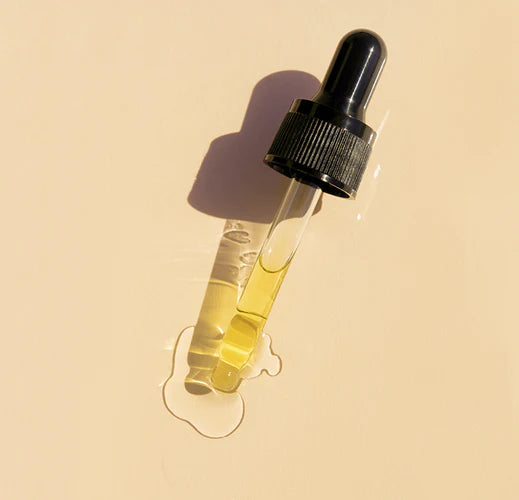
OSKIA's approach to chemical exfoliation centres on lactic acid, selected for its balance of efficacy and tolerability. The Liquid Mask Lactic Acid Micro-Peel uses 10% lactic acid - the EU maximum permitted concentration for a leave-on cosmetic product - in an overnight format. The format is deliberate: a rinse-off acid treatment works for approximately 10 to 15 minutes; an overnight leave-on product allows the acid to work for 6 to 8 hours. The formula includes Niacinamide, MSM and mixed molecular weight Hyaluronic Acid, making maximum-strength overnight use tolerable for most skin types.
How to introduce exfoliating acids without disrupting your skin
The most common mistake with acids is using them too often too soon. Start once a week. Apply in the evening, after cleansing. Allow the skin to adapt over several weeks before increasing frequency to two or three times per week. The one rule that is not negotiable when using AHAs: wear SPF every morning. AHAs temporarily increase the skin's photosensitivity, and daily SPF is non-negotiable regardless of season.2
Frequently asked questions
Can I use AHAs and BHAs at the same time?
You can, though it is not always necessary. Because AHAs and BHAs work via different mechanisms, combining them can address a broader range of concerns. Start with each separately and introduce any combination product slowly.
How long does it take to see results from an exfoliating acid?
Most people notice a change in surface texture and radiance within two to four weeks of consistent use. Deeper concerns, including fine lines, uneven pigmentation and pore appearance, take longer - typically eight to twelve weeks of regular use. Consistency matters far more than frequency.
Can I use exfoliating acids if I have eczema or rosacea?
With care. PHAs are generally the safest starting point for eczema-prone skin. For rosacea, a lactic acid formula that includes anti-inflammatory ingredients — such as Niacinamide or MSM - is more tolerable than a stand-alone glycolic acid product. Always patch test and introduce slowly.
1. Tang SC, Yang JH. "Dual Effects of Alpha-Hydroxy Acids on the Skin." Molecules, 2018.
2. Babilas P, et al. "Cosmetic and dermatologic use of alpha hydroxy acids." J Dtsch Dermatol Ges, 2012.
3. Grimes PE, et al. "The use of polyhydroxy acids (PHAs) in photoaged skin." Cutis, 2004.